 otter.
Trust & governance
Autonomous. Not unsupervised.
Independent verification, security and privacy requirements, deterministic quality gates and named human approvals.
Trust & governance
Autonomy without blind trust.
Quality is demonstrated through evidence, not asserted by the model that wrote the code.
Tests before implementation
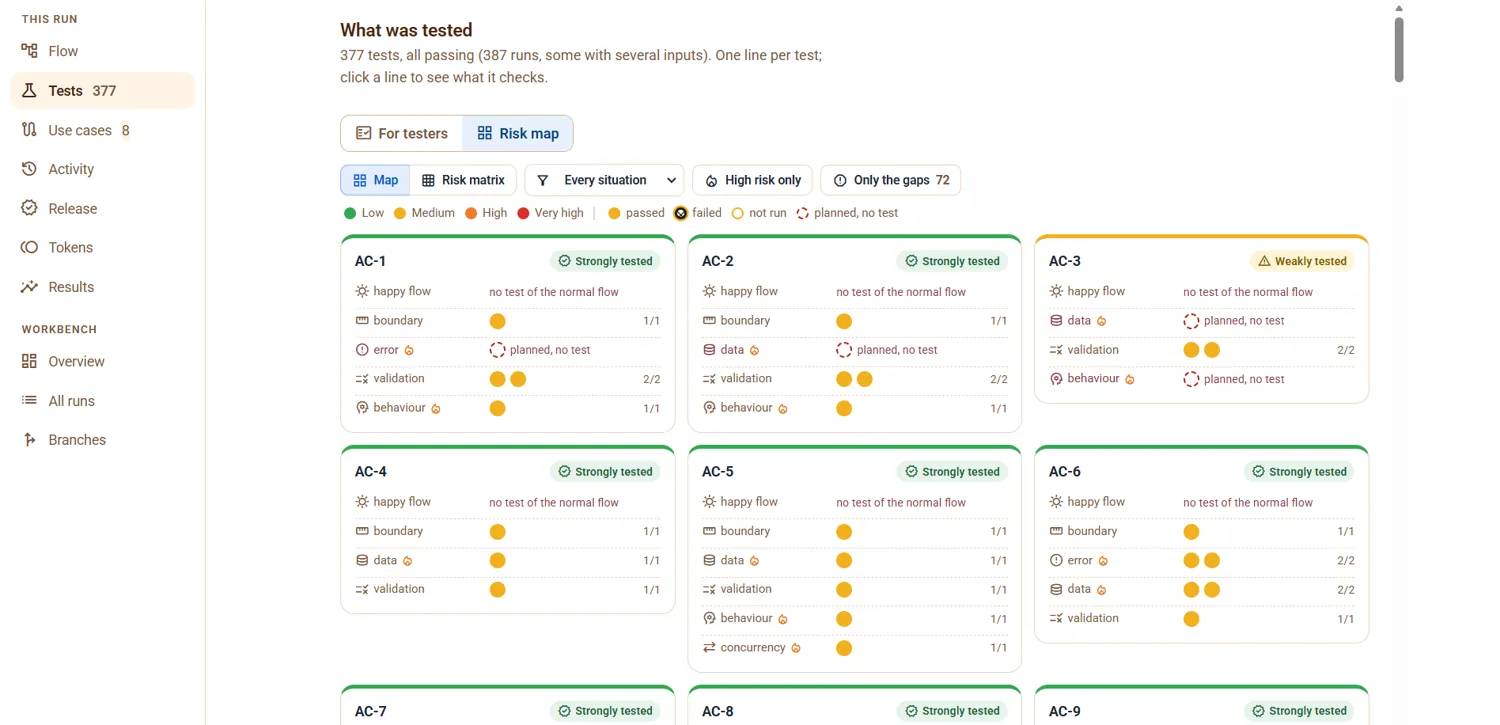
Acceptance criteria become tests, locked against weakening by developers. Deterministic checks cover builds, lint, regressions and traceability.
Independent verification
Separate reviewers assess changes, security and policy requirements. Corrective agents resolve findings; harmful changes can be rolled back.
Human approval where it matters
People approve technical design, sign-off and release. Agents do not merge into main themselves. Defined write permissions and budgets constrain execution.
End-to-end evidence
Review guided tours of code and tests, criterion by criterion. Verify logged-in application journeys, connected systems, performance and organisational security requirements.
Build what’s next.
Explore the next generation of software development with Otter.